
What Is a VPN?
Why do you need a VPN?
No one likes to be watched or tracked — even with nothing to hide. That is why it pays to step up your privacy. Here is when a VPN earns its keep:
A VPN secures your connection on public Wi-Fi so you can browse in full privacy. Hackers have many ways to intercept data on open networks, but with a VPN your traffic is encrypted and invisible to them.
Government agencies, marketers, and internet service providers would all love to track and collect your browsing history, messages, and other private data. Best way to hide it? Using a VPN to keep your data to yourself.
If you want to access your home content while traveling around the world, a VPN can help. Install VPN Duo on your device and never miss a friend’s post on social media.
Like gaming online? A VPN masks your real IP address, which helps shield you from targeted DDoS attacks, and it can stop your ISP from throttling your connection during long sessions.
Avoid targeted pricing, fake websites, and bait and switch attacks with a VPN. Shop securely, knowing your credit card details are safe from snoopers even on public networks.
Watch your favorite shows without slowdowns. VPN Duo can save your movie night by keeping your ISP from throttling your connection based on what you are streaming.
How does a VPN work?
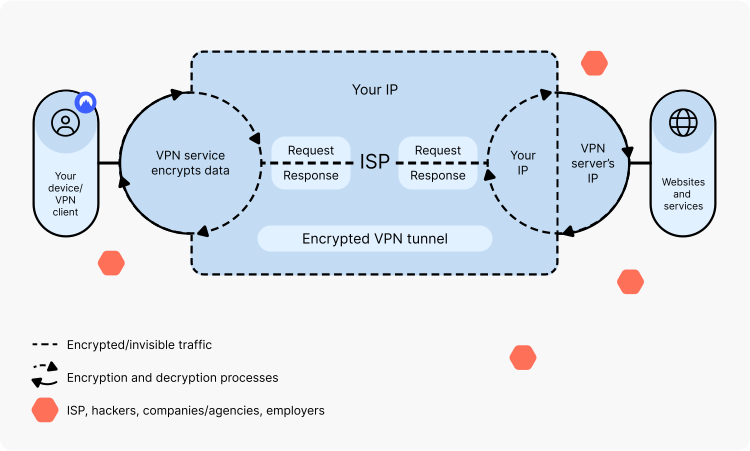
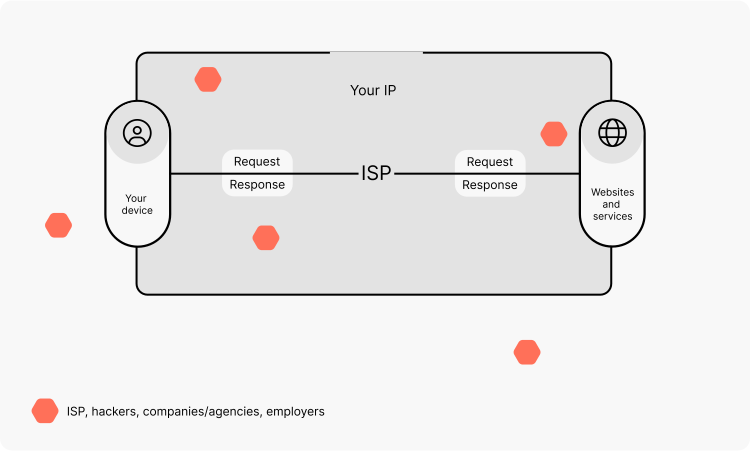
A VPN creates an encrypted tunnel between your device and a remote server, so your data travels in secret instead of straight through your ISP. It hides your real IP address and encrypts your connection to keep your browsing private.
How to use a VPN
Getting started is straightforward — VPN Duo handles the hard parts for you.
Choose a VPN provider
Select a VPN provider that meets your needs, get a subscription, create an account and download the app.
Log in
Once installed, open the app, and log in with your credentials.
Connect to a VPN server
Pick a server in a country you want or, if the app offers it, use the automatic connection feature that chooses the best server for you.
Customize VPN settings
Explore your VPN app’s settings to customize your preferences — change the VPN protocol, enable security features, or set up a kill switch.
Frequently Asked Questions
VPN gives you a new IP address and encrypts the connection between your device and the VPN server, so no one can see what data you send and receive. But it won’t make you anonymous — there are other ways someone could track your actions online. Hackers could install malware (keyloggers, spyware, etc.) on your device. Or if you overshare online and use the same username everywhere, anyone with decent googling skills can gather a wealth of information about you.
A VPN is not an all-in-one solution for anonymity but rather an extra layer of security that protects your internet traffic.
You can use other software that offers similar features to a virtual private network, but nothing can replace the all-round security and privacy a VPN offers. A Smart DNS will help you gain access to blocked sites, but it won’t encrypt your traffic. Tor will protect your privacy, but many websites will block your access.
So if you want a service that protects your privacy, gives you a new IP address, and encrypts your data at the same time, opt for a reliable VPN provider.
Yes, if you choose a trustworthy VPN service provider, using it is absolutely safe.
What is a VPN provider you can’t trust? The one that says it’s free. It will track your online activity, what websites you visit, the content you interact with, and sell it to the highest bidder. Why? Because they must maintain hundreds of servers in different countries and hire people to take care of the infrastructure. A service that big has to make money somehow, so you end up paying for it in some way. Besides, a free VPN won’t encrypt your connection properly and might even contain malware or spy on your entire local network.
All of this means that if you do your research and choose the best VPN provider out there, using a VPN isn’t dangerous.
Yes, you should keep your virtual private network on all the time — with a few exceptions. It’s the only way to be sure that your real location and IP address are hidden, online data encrypted, and browsing history invisible to your internet service provider and other third parties.